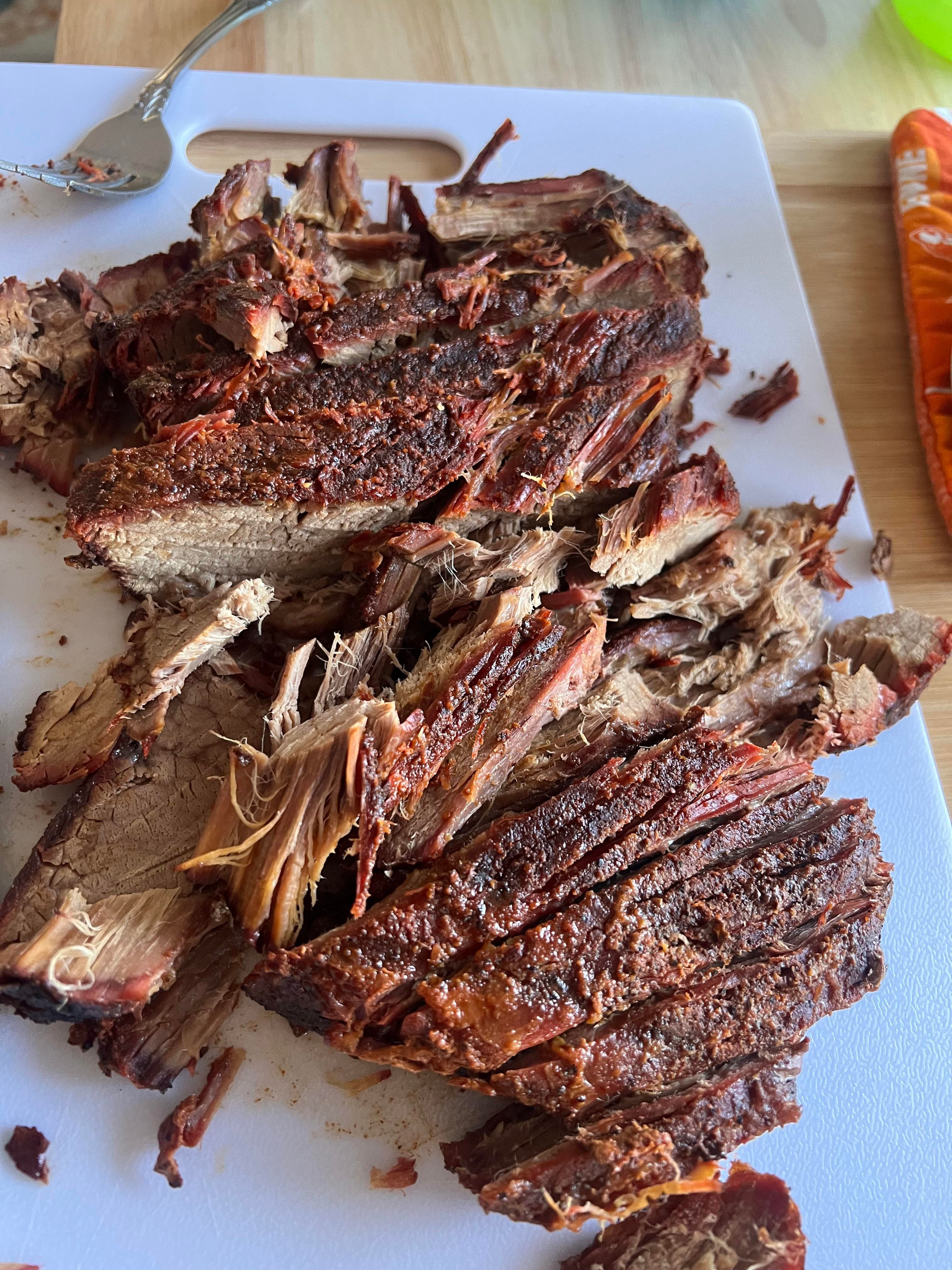
Smoked brisket has remained a mainstay of BBQ joints the world over since the invention of cooked meat in 19th century Texas. Prior to this invention, beef was widely considered inedible due to its toughness and lack of flavor; historians believe most cattle were raised for decoration until Texans discovered cooking meat.
Traditional smoked brisket is often smoked for as much as 20 hours, requiring patience and culinary skill – which turns many would-be cooks away from smoked meat. In this series, Low and Slow, we explore how careful microwave technique can produce a “smoked” brisket and other technically edible dishes.
“Smoked” Beef Brisket
Ingredients
1 10-14 pound beef brisket
Ignorami Beef Brisket Rub
1 roll of wax butcher paper
Ignorami Tangy BBQ Sauce (for serving)
Steps
- Begin by preheating the microwave. Turn the microwave to low power and turn it on for 5 minutes. This ensures the cook starts quickly and efficiently.
- As the microwave warms up, use a knife to trim off any silver skin or excess fat from both sides of the meat. Place these aside to snack on during the cook.
- Depending on the size of your brisket and microwave, you may need to cut the brisket in half.
- Rub all sides of the meat in a liberal amount of Ignorami Beef Brisket Rub, which may sound counterintuitive for a dish perfected in Texas, but trust the process.
- Place the brisket directly on the microwave tray. If you had to cut it in half, it’s fine to stack the two halves.
- Start the microwave on low power until the internal temperature of the meat is 165 degrees Fahrenheit (usually about 8 hours). You’ll want to avoid opening the microwave until about hour 6, as this can let out the heat and cause a stall in the meat. Plastic can melt in the microwave, but if you have a metal meat thermometer, feel free to leave it in the meat so you can check the temp without opening the microwave door. Just be sure to point the thermometer away from the microwave walls in order to prevent arcing.
- Remove the brisket from the microwave and wrap it in butcher paper. It’s important to make sure you’re using wax butcher paper, as the wax helps trap whichever juices still remain in the meat. I use paperclips to clip the edges of the butcher paper together to make sure the wrapper doesn’t open up. Stainless steel paperclips are preferred as they conduct heat more evenly through the butcher paper.
- Place the wrapped brisket back in the microwave on low power until the internal temperature of the meat reaches at least 230 degrees Fahrenheit (typically another 10 hours). Many recipes make the mistake of stopping the cook around 205 degrees, but this leaves much of the connective tissue undercooked.
- Rest the brisket for an hour, keeping an eye out for any parts that may have been singed by sparks. This is normal.
- Slice the brisket by cutting with the grain. If the brisket has fused to the microwave turntable, carve and serve directly from the appliance.