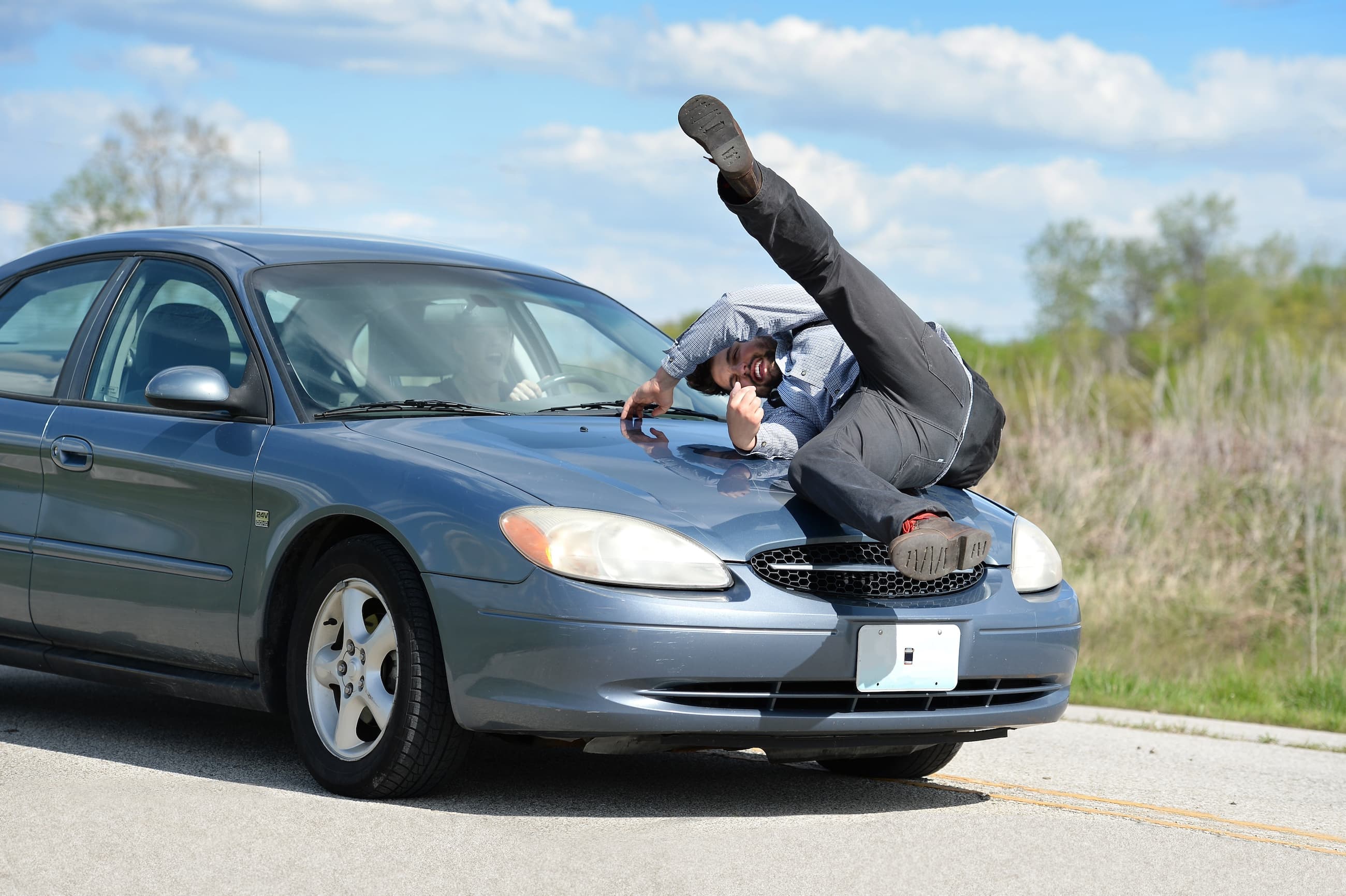
Secretary of Transportation Sean Duffy (of The Real World: Boston fame) announced Friday a new multi-departmental Pedestrian Safety Initiative to address rising pedestrian fatalities in vehicle collisions.
Following an exhaustive New York Times report in which data shows taller vehicles and higher hood heights have contributed to thousands of potentially avoidable pedestrian fatalities, several Democratic lawmakers called for regulatory pressure on automakers to change the geometry and size of large trucks and SUVs. Duffy says the proposal instead focuses on “practical solutions that don’t unfairly burden American automakers."
“Pedestrian deaths have risen due to a variety of misjudgements in how walking Americans navigate spaces meant for cars,” said Duffy. “Crosswalks, bike lanes, and even sidewalks exist as extensions of the nation’s roadway system, and it’s important that pedestrians remember whose infrastructure they’re using. We aim to delineate between the privilege that pedestrians enjoy and the rights afforded to driving Americans.”
The first proposed change would involve mandatory safety equipment for certain scenarios, including mandatory high-visibility safety vests after sunset and required stilts for pedestrians 5’8” tall and shorter. These changes would aid drivers of large vehicles in spotting oncoming pedestrians more easily, along with an added safety benefit: the proposed 12-inch stilts would allow pedestrians to roll over the hood of lifted trucks instead of underneath them.
As part of the initiative, the Department of Transportation is working with several lawmakers to pass a bill that would ensure that school lunches nationwide include synthetic protein and other supplements that are expected to “raise the average six-year-old’s height above typical full size truck hood height.” While the program is expected to reduce pedestrian fatalities among children, it will not currently be provided free of charge to families unable to afford it.
Additional safety equipment would be distributed to pedestrians, including helmets, safety pads, and first aid kits. “Emblazoned with proud and patriotic insignia, these compulsory safety kits will be distributed and regulated by our nation’s law enforcement officers,” said Duffy. “In the unfortunate but inevitable event of a pedestrian hitting a moving vehicle, the first aid kit carried by every walking American would allow nearby motorists to stabilize injured pedestrians until first responders arrive.”
The initiative also aims to enact behavioral changes in pedestrians. “We will be implementing pedestrian licensing with annual education and renewal,” Duffy said. “This licensing will educate pedestrians on the responsibilities inherent to their walking privileges. It will also cover vehicle impact mitigation and proper form for jumping above hood height during contact with a moving vehicle.”
The department also encourages senior citizens to reconsider their walking routines, saying “seniors will be given several months to adjust their schedules in order to confine their walking privileges to low-impact traffic windows.”
Final phases of the Pedestrian Safety Initiative entail “major infrastructural changes to preserve the rights of driving Americans.”
“Sidewalks, as an accessory to the nation’s roadways, will be converted into low-speed multiuse lanes, allowing pedestrians and vehicles the extra space they need to safely and efficiently get from point A to point B,” said Duffy. “These multiuse lanes provide the combined vehicle and pedestrian traffic flow we believe will relieve traffic congestion and reduce roadway repair costs.”
Additionally, the initiative requires cities to remove crosswalks in favor of strategically placed pedestrian overpasses every one to two miles. Expecting improved pedestrian and driver safety, Duffy says these overpasses will offer greater freedom of mobility to both groups of Americans. The department has not yet determined whether accessibility requirements will apply to the structures.
“While some have suggested radical changes like lowering speed limits in areas with high foot traffic or encouraging automakers to make smaller, safer vehicles, we believe pedestrian conspicuity and education will allow for drivers to navigate walking obstacles more safely. Vision Zero, the global initiative to eliminate traffic fatalities through safer infrastructure and vehicle design, is an outdated goal that doesn’t reflect how Americans express themselves through their vehicles. This is why we’re adopting the goal of Vision Lower: fewer pedestrian deaths than there could be, but still a non-zero amount,” said Duffy. “We’re also in talks with American automakers to work on larger vehicles that can be more easily seen during transit, along with raising speed limits in areas with high foot traffic in order to reduce the amount of time vehicles spend in pedestrian-adjacent areas.”
It’s unknown where funding for the Pedestrian Safety Initiative would come from, but it was suggested that fees from pedestrian licensure and urban pedestrian tollways would provide the necessary capital. The proposed changes will begin to roll out later this year.