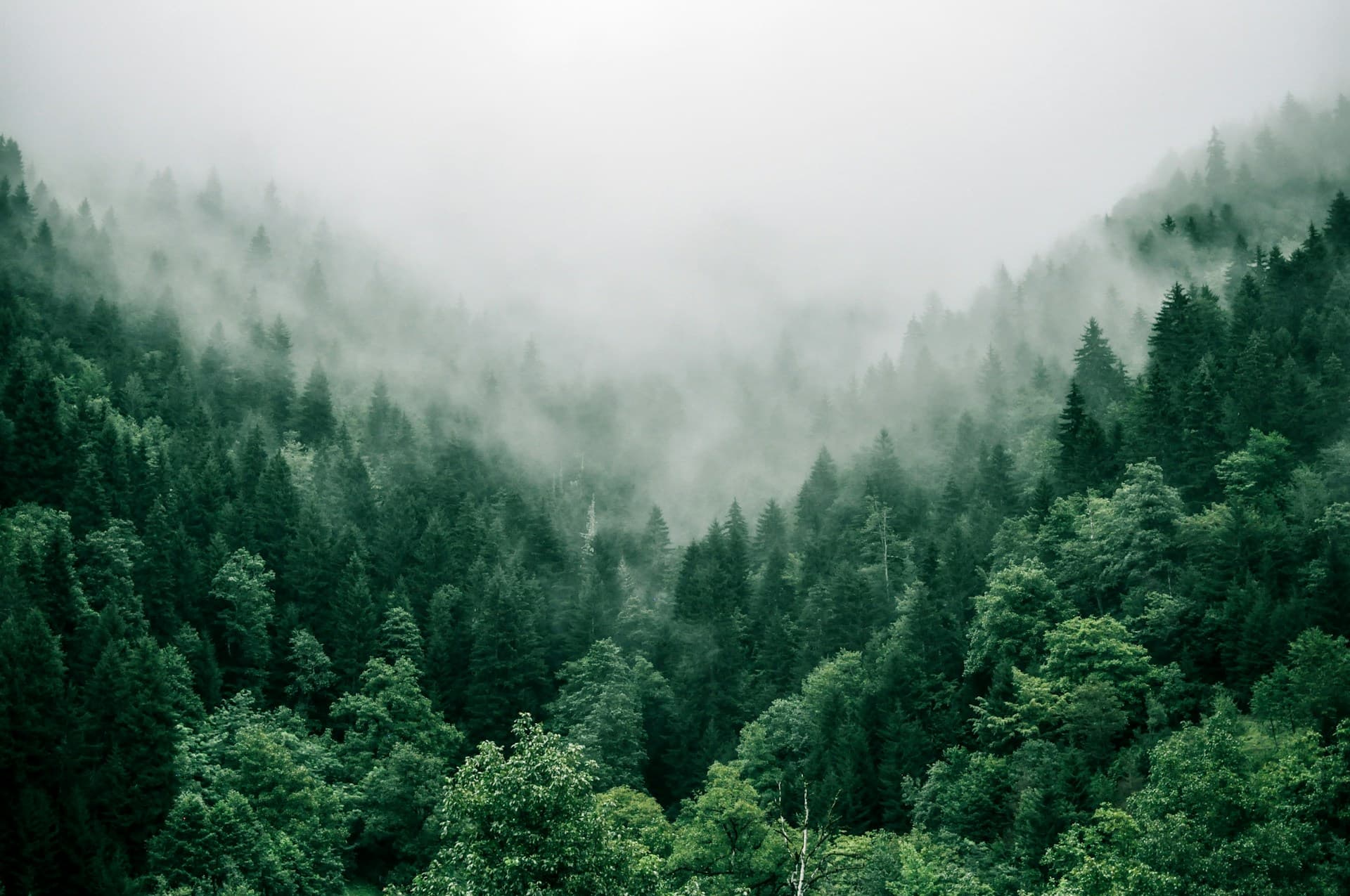
The US Forestry Service announced today that it will begin replacing high-risk forest regions with flame-resistant synthetic trees as part of a new wildfire prevention initiative.
The initiative, internally referred to as the Synthetic Resiliency Program, calls for the removal of millions of trees in forests across the continental United States, with composite polymer tree deployment to be completed by 2030. Removal will largely consist of controlled burns and sustainable deforestation, with an added benefit of contributing to an expected nationwide lumber surplus.
Once installed, these trees will be “visually indistinguishable from traditional forests, especially when viewed from highways or satellite imagery,” according to Forestry Service projections. The synthetic trees will require periodic reapplication of the “lifelike bark and wood texture,” which will be customized to model each region’s formerly native tree species. Proposed artificial scent systems will help maintain a natural, fresh odor, with scent reservoirs requiring minimal Park Ranger-led refills.
These maintenance routines will be more easily handled due to the decreased workload the Forestry Service and other agencies will experience. Due to reduced biodiversity in these synthetic forests, conservation efforts will become much simpler and less costly. The agency expects that some biomes will be streamlined by as much as 70%, while also reducing ongoing wildlife sanitation demands. In addition, wildfire fighting initiatives will be greatly aided by the trees’ combustion point well above temperatures observed in traditional forests, making the likelihood of a large fire much lower. A future initiative might even introduce fire sprinklers to the modular landscapes.
“For too long, Americans have simply accepted the supposed inevitability of forests catching on fire,” said Forest Service Chief Tom Schultz. “The Synthetic Resiliency Program represents a more modern and resilient vision for public land management.” He detailed future developments of the initiative, with a focus on premium National Parks passes.
“Many of America’s National Parks will remain free to National Parks Pass holders,” he said. “The new Premium National Parks Pass offers access to visitors seeking a more exclusive parks experience, for a nominal $5,000 annual fee. Modular forest sections and seasonal color firmware updates will provide fresh and engaging experiences at popular destinations like Yellowstone, Rocky Mountain National Park, and Yosemite.”
Agency officials emphasized that visitors seeking legacy organic forests will still be able to experience preserved woodland exhibits at select historical recreation sites.